








In this article
- What is kaizen in manufacturing?
- Start with one recurring problem worth solving
- Use PDCA to turn an idea into a tested improvement
- Plan: understand the loss and define the test
- Do: try the change on a manageable scale
- Check: compare like with like
- Act: adopt, adapt or reject the change
- Example: keep a better changeover working after the trial
- Carry the accepted change into production with SkyPlanner
- Shared planning makes recurring changes easier to manage
- Sustain the method, not just the improvement chart
- Make the next improvement part of the daily plan
Home » Resources » Kaizen in Manufacturing: Make Improvements Stick
Estimated reading time: 11 minutes
The improvement workshop ends with a better workstation, a shorter changeover and a team pleased with what it achieved. Then the product mix changes, another shift takes over, and the old problem returns. The idea was useful. The factory never made it the normal way to work.
Kaizen in manufacturing closes that gap through repeated, practical improvement involving the people who do the work. You choose a problem, understand its cause, test a change and make a successful method repeatable. The aim is less wasted effort and more dependable production, not a longer list of completed initiatives.
The production plan must keep up, too. Once an improvement changes an operation’s realistic duration, route or available capacity, SkyPlanner helps you carry that change into the schedule alongside your other orders. Your team establishes the better method; SkyPlanner handles the connected scheduling calculation so the benefit does not remain separate from daily production.
What is kaizen in manufacturing?
Kaizen is continuous improvement through recurring changes to the way work is done. In manufacturing, it brings operators, supervisors and relevant specialists together to reduce waste, improve quality and make work easier to perform reliably.
A change can be modest: preparing the right tools before a changeover, removing a repeated search for parts or clarifying when a batch is ready for the next operation. What matters is whether it solves a real problem and becomes a dependable practice.
Kaizen is part of lean manufacturing, but it is not another name for every lean tool. A gemba walk helps you observe actual work. Root cause analysis helps you establish why a problem occurs. 5S helps organize and sustain the workplace. Kaizen brings learning and action into a continuing improvement routine; the team uses the tools that its particular problem needs.
A kaizen event is a concentrated improvement effort with dedicated people and time. It can help when several functions need to work together on a bounded problem. Daily kaizen uses the same improvement discipline in smaller pieces during normal work. Neither is complete merely because a meeting ended or a change was installed.
Start with one recurring problem worth solving
Choose a problem that people recognize and that matters to production. “Improve efficiency” gives a team little direction. “The bending cell repeatedly waits for tooling after the previous job finishes” gives it something to observe and change.
A useful first problem has a clear boundary, a visible effect and an owner able to support a trial. It should be small enough to investigate without redesigning the factory, yet important enough that removing it would save effort, avoid defects or help customer work move.
Ask the people doing the work where the same difficulty returns. Look for searches, repeated adjustments, missing information, unnecessary movement or recurring waiting. Then check the production consequence. Making a non-constraining operation faster may reduce effort, but it will not necessarily shorten the customer’s lead time if the batch still waits at the next stage.
Write down what happens, where it happens and which work is affected. Keep the observation separate from your preferred solution. “Buy another machine” is a proposed investment, not a description of the problem.
Give one person responsibility for taking the investigation through to a decision. Include operators from the shifts that will use the method, plus maintenance, quality, engineering or planning where their work is affected. The supervisor’s job is to make time and remove obstacles, not arrive with an answer that everyone else is expected to confirm.
Use PDCA to turn an idea into a tested improvement
Plan–Do–Check–Act, or PDCA, gives the team a repeatable way to learn. The important distinction is between a promising explanation and evidence that a change works.
Plan: understand the loss and define the test
Observe the work with the operator. When does the interruption begin and end? Does it occur on every product, on one shift or after a particular changeover? What evidence supports the suspected cause?
A late start does not by itself prove that the setup method is slow. Tools might be missing, material might be unavailable, or the previous operation might have released the job late. Investigate the cause before choosing the countermeasure. Use a focused root cause analysis when the explanation is uncertain rather than turn a guess into a new instruction.
Agree what the trial will change, who will run it and what would count as a useful result. Choose a direct measure of the loss and a check on side effects. For a setup-preparation change, that might mean setup duration together with first-piece acceptance and the preparation effort moved elsewhere.
Do: try the change on a manageable scale
Test the proposed method on suitable work before extending it. Make sure the people involved understand the change and have the authority, resources and time to carry it out. Changes affecting equipment, safety or product acceptance still need the appropriate specialist approval.
Keep the trial narrow enough to interpret. If the team changes tooling, material, staffing and the job sequence at once, a better result will be difficult to explain. Note what actually happened, including departures from the proposed method.
Check: compare like with like
Review the result with the people who performed the work. Was the targeted loss smaller? Was quality maintained? Did the method remain usable under normal conditions, or did the trial depend on extra help that will not be available again?
Compare similar products, batch sizes and operating conditions, and keep the measurement boundary consistent. Elapsed setup time, operator effort and order lead time answer different questions. Moving preparation earlier can reduce machine waiting without removing that preparation work.
Look beyond the best run. Try the method under the conditions it will normally face, including relevant shifts and product variants. If the evidence is mixed, identify what remains uncertain and plan another test instead of announcing a factory-wide saving.
Act: adopt, adapt or reject the change
If the change works, agree the new method, train the people who need it and update the information that governs the work. If it does not, revise the explanation or the trial and repeat the cycle. A useful experiment can rule out a bad idea without becoming a failed project that nobody wants to discuss.
Name who owns the new standard and when the team will check it again. “Act” is the point where an improvement begins to become ordinary production, not the point where responsibility disappears.
Example: keep a better changeover working after the trial
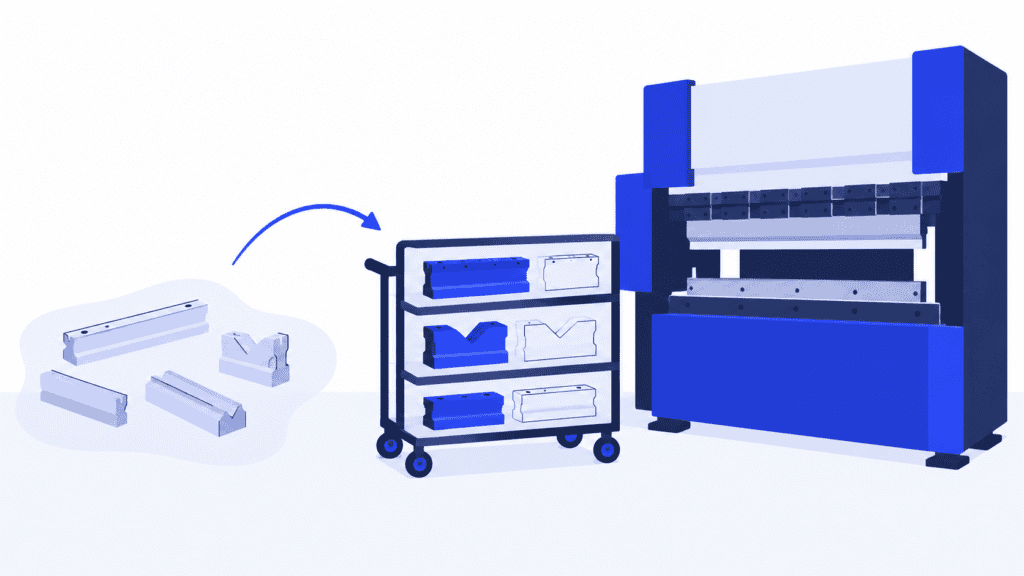
Imagine a bending cell where operators regularly search for tooling after the previous order finishes. The team initially describes this as a long changeover. Observation shows that preparation is starting too late and that the tool list is unclear for a recurring product family.
Operators and engineering agree a clearer preparation list and a designated location for the required tools. They test preparing the next approved set before the machine becomes free, while retaining the required checks. This is a change in preparation and handoff, not an instruction to rush the setup itself.
The team records the machine’s setup interval, the preparation effort and first-piece results. It repeats the trial on representative jobs and includes the other shift. If the machine waits less but another operator spends more time searching, the original loss has only moved. The method needs another adjustment.
Once the result holds, the supervisor assigns responsibility for preparing and returning the tools. Engineering maintains the list, and the shifts learn the agreed method. The planner then reviews the setup allowance used for the affected work. Leaving the old allowance unchanged would hide the usable capacity; replacing it with the best trial time would risk promising capacity the cell cannot reliably provide.
The accepted planning value should reflect the method the team can repeat. That is how a shop-floor improvement becomes useful for the next customer orders, not just the batch used in the workshop.
Carry the accepted change into production with SkyPlanner
SkyPlanner APS connects the evidence from completed work with the plan for upcoming orders. Its Timer records actual job time through start, pause, continue and finish events. The Job Report gives that time its job and workstation context, helping you compare planned and actual operation durations.
Those records give your improvement discussion a firmer starting point than remembered estimates. Check how consistently the team logged the work and what the recorded interval includes before using it as the comparison. The data helps you investigate; your team still decides whether the changed method caused the result.
For recurring work, SkyPlanner’s historical time-estimation function can also inform a process-step duration estimate when past order data is available. Use that history alongside the trial evidence. A historical estimate is useful planning input, not automatic proof that a newly tested method is ready to become the standard.
Once the team accepts the change, reflect its production effect in the relevant planning data: the process-step or setup duration, the defined route and dependencies, eligible workstations or resource availability. Arcturus, SkyPlanner’s scheduling AI, calculates the resulting schedule against the configured capacity and priorities. The Gantt shows how the work fits together.
In the bending-cell example, a dependable shorter setup allowance changes the space available for the affected jobs. Those jobs still compete with other orders on the same machine, and their following operations still need capacity. SkyPlanner coordinates that connected work instead of leaving the planner to repair each machine queue separately. You save scheduling effort and get a plan that better reflects how production now operates.
A faster operation also does not oblige you to produce unnecessary stock. Review what the changed schedule means for actual orders: earlier completion where useful, room for additional customer work, or less pressure on an overloaded shift. That is where released capacity can become a business benefit.
Shared planning makes recurring changes easier to manage
Mamec, a Finnish mixer manufacturer and high-tech contract manufacturer, illustrates why a coordinated plan matters. Before SkyPlanner, supervisors prioritized thousands of interdependent work orders using delivery dates on paper orders. The ERP’s planning functions did not provide an overall picture, and managing those dependencies by hand burdened production control.
Mamec integrated SkyPlanner with Oscar ERP and made it the main production-planning platform. The company reports a clearly lighter planning workload, less workstation downtime through a better work sequence and easier handling of changes to manufacturing sequences. Staff share a view of job status and scheduling rather than depend on separate assessments of the load.
For a factory improving its methods, that shared basis is valuable: a change can be considered alongside the customer work it affects, without another round of disconnected queue adjustments.
Sustain the method, not just the improvement chart
A better result will last only if the new way of working remains practical. Put the accepted method where people use it, remove obsolete instructions and make sure the required tools, information and preparation are available on every relevant shift.
Use a short follow-up to check both the method and the result. Ask whether people can perform the work as agreed, whether the original problem is returning and whether a new difficulty has appeared elsewhere. If the standard is routinely bypassed, find out why. An impractical instruction needs improvement, not another signature confirming that it exists.
Keep the response visible to the people who raised the problem. Tell them what was tried, what was learned and what happens next. When an idea is not adopted, explain the reason. Participation becomes worthwhile when observations lead to decisions rather than disappear into a suggestion list.
Measure success through the loss you set out to remove and its production consequence, not the number of ideas submitted. Less rework, less searching, more dependable preparation or reduced machine waiting gives you something useful to sustain. A board full of completed actions does not establish that any of those outcomes changed.
Once the method holds through ordinary production pressure, take the learning to another suitable area. Copy the reasoning and the improvement routine; check the local cause before copying the same solution.
Make the next improvement part of the daily plan
Kaizen works when the factory keeps learning and uses what it learns. Start with one recurring difficulty, involve the people closest to it and follow the change beyond the first good result. Make the better method repeatable, then make the production plan reflect it.
Choose SkyPlanner when your improvements need to reach a shared schedule rather than remain in separate machine queues and planning spreadsheets. It brings actual job time, defined production steps and available capacity into the same planning environment, while Arcturus handles the scheduling calculation. SkyPlanner integrates with any ERP or MES through its open REST API, so you can build on the systems already supporting your production.
Book a SkyPlanner demo with one production change your team has agreed and the other orders using the same resource. Explore how the revised duration, route or availability affects the schedule and which delivery decisions need attention. If you would rather explore the planning approach first, try SkyPlanner with demo data.
Jussi Mäntylä
Production Planning Specialist, SkyPlanner


