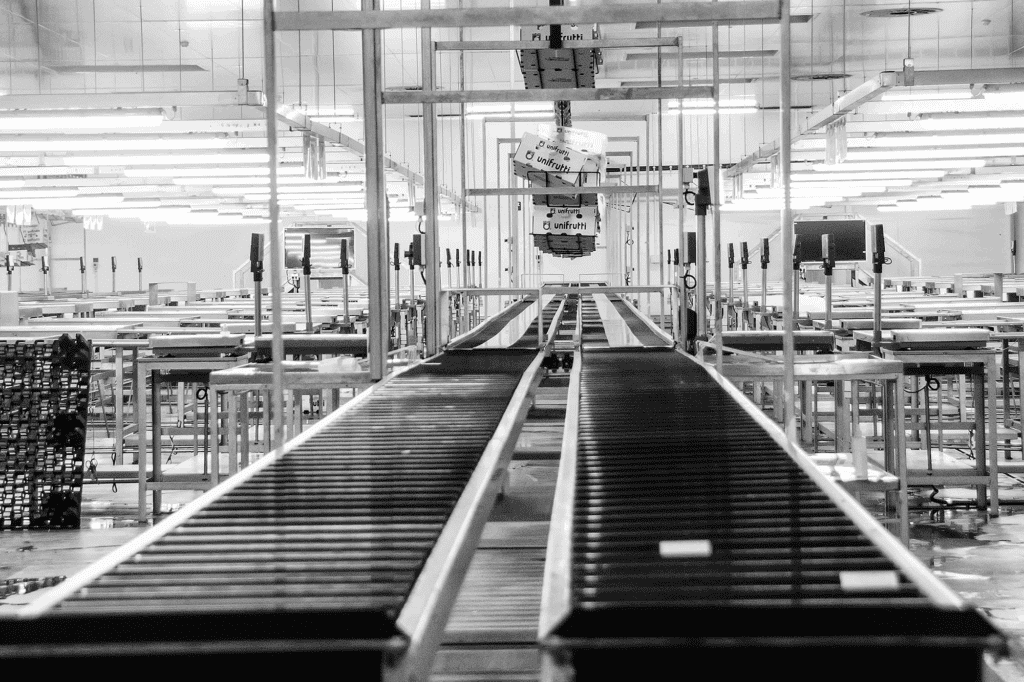
什么是制造业?
预计阅读时间: 15 分钟
自从人类创造出第一批用于狩猎和农业的工具以来,制造就已成为人类生活的一部分。只需环顾四周,就能看到各种制造出的成品,从移动设备或计算机、椅子、冰箱里的牛奶,到我们穿的衣服;几乎每件物品都经过了制造过程。在当今世界,制造业是最具盈利能力的业务之一。
但制造业究竟是什么?它是如何运作的?它的流程有哪些?该行业的未来又是怎样的?
什么是制造业?
制造业是指通过体力劳动、工具、化学加工、机械或这些方式的结合,通过有组织的流程将原材料转化为最终产品的任何业务。
这些产品随后以高于原材料成本和制造过程成本的价格售出。得益于技术,制造业可以通过机器自动化以更低的价格生产大批量的产品或组件。
制造领域涵盖了众多业务;例如,您可以找到汽车、航空航天、纺织、家具、电子、食品等许多行业。必须强调的是,服务的销售不属于此类业务范畴。
作为一个整体,制造业致力于为其他公司或最终消费者大批量或小批量地开发物理组件或产品。
制造领域非常广泛。一些企业甚至生产特定的零件,这些零件将被组装或用于为另一家公司创建最终产品,从而使其成为供应商。一个简单的例子是一家专门从事塑料制造的公司,它收到一份采购订单,要求制作一种瓶子设计,随后用作面霜或果汁的容器。这意味着该行业可以根据特定要求创建定制产品。
制造生产方法的类型
制造业使用三种生产方法进行运作:
按库存生产 (MTS):
此类制造业通过分析市场趋势、当前需求和销售预测,来计算并决定公司需要生产多少产品。执行此程序是为了让企业利用所呈现的机会,并为特定趋势下不断增长的需求做好准备。
MTS 利用技术处理公司的内部信息(如销售历史),并结合当前趋势进行分析,以创建市场预测。然而,为了使这种方法取得成功,这些预测必须尽可能准确,因为生产过多会造成库存积压和损失,而生产过少则会导致失去销售和获利的良机。
一个简单的例子是季节性产品的制造。在 12 月份之前,各行业致力于制造新的圣诞产品、玩具和服装等,以满足当时的消费需求。MTS 制造趋势产品,将其存储在仓库中,或直接运送给分销商在实体店销售。零售公司经常使用这种方法来跟上消费者的需求。
按订单生产 (MTO):
此类制造业仅生产采购订单所要求的产品。就这么简单。与按库存生产 (MTS) 不同,MTO 不承担趋势或预测的风险。MTO 更致力于根据客户的规格要求进行高质量的产品制造。
制造飞机零件、汽车和专业产品通常使用这种方法。其优势之一是仅购买制造订单所需的原材料,从而节省了库存成本。然而,这种方法也可能存在缺点,例如供应商对原材料的可用性需求更高。
按订单组装 (MTA):
按订单组装结合了 MTS 和 MTO 的部分特点。这种组合的基础是储备部分原材料库存,但等待采购订单后再开始制造。MTA 承担了一部分 MTS 销售预测的风险,但确保了 MTO 的销售。 MTA 必须拥有技术娴熟的团队进行高效组装,在不牺牲质量或忽视客户规格的情况下按时交付产品。
一些行业,如计算机或手机制造,使用这种方法。另一个例子是食品行业,例如披萨店预先制作好披萨底并存放在冷冻库中,以便更快地准备订单。需要强调的是,MTA 方法不适用于易腐产品。

利用 AI 进行高级生产计划 – SkyPlanner APS
阅读更多关于我们利用 AI 力量进行生产计划和优化的方法。
制造流程的类型
制造行业使用不同的流程来精心制作产品,包括机械、劳动力和软件,以自动化并促进原材料或组件向成品的转化。如今,大多数公司根据业务领域、要制造的产品以及拥有的资源和设备,使用这五种制造流程之一。如果情况需要,他们甚至可以使用混合流程或多种流程。
- Repetitive manufacturing: With the repetitive manufacturing process, the production line requires minimal setup and can change the speed of its operations according to consumer demand. As its name indicates, this process is committed to creating the same product or components 24/7 throughout the year. It can also develop products of the same family or very similar.
The automotive or electronics industries use this type of process. Repetitive manufacturing is ideal for companies that need to mass-produce products and whose demand is predictable and stable. - Discrete manufacturing: Discrete manufacturing is similar to repetitive manufacturing since both use a production line; however, it is prepared for changes and various setups according to the required product designs. These finished products may have several significant differences.
One of its characteristics is that the raw material or the components of this type of production can be decomposed and recycled to be used again. An easy example is the industry of toys or smartphones. - Job shop manufacturing: This process uses work areas and workshops instead of the assembly line. This process also has a slower work rate since the product will be manufactured through different stations and with specialized labor until the product is finished.
Job shop manufacturing is frequently used to manufacture a one-of-a-kind product or in minimal quantities that are Make to Stock (MTS) or Make to Order (MTO). Managers create a discrete manufacturing work line to fulfill the orders if the demand grows.
Companies that manufacture furniture for the aerospace industry use this process. - Continuous process manufacturing: This type runs 24/7 throughout the year and creates many identical or similar products, much like repetitive manufacturing. The difference is that the raw materials used in production are gases, liquids, and powders instead of solid products. In the case of the mining industry, for example, the materials can be granular or chunky.
Pharmaceutical industries, oil refining, and paper are examples that use this manufacturing process. - Batch process manufacturing: This type of manufacturing process has similarities to discrete and job-shop processes. Batch process manufacturing is based on consumer demand and whether a production batch can be enough to meet that demand. After fulfilling it, the equipment is cleaned and prepared for the next set. Similarly, this process works with liquids, gases, and slurries instead of solid products.
Batch processes can only be achievable when raw materials and components are made to a relaxed standard. Examples of this type of manufacturing are newspapers and magazines, fast food chains, and others. This type of process runs continuously by nature.
今天,随着技术的进步,人们认为出现了一种在制造领域仍处于起步阶段的新流程:
- 3D Printing manufacturing: Thanks to technological growth, this manufacturing process is more available to many. 3D printing was first introduced in 1981 and is now more accessible. 3D printing creates products layer by layer according to the instructions of a three-dimensional model. Companies like Ford use this technique.
产品制造的阶段
为市场创造一个新产品听起来是一项简单的任务;尽管如此,公司仍需要遵循这些步骤,以确保所设计的产品会有需求,从而使制造公司获得盈利。
- Brainstorming an idea: First, think of a problem and then brainstorm what kind of product could be the solution. Is there something similar in the market already? Who will be the target market? These questions and more will help brainstorm, a crucial step in developing a manufactured good. This process will help companies design and define a product, its unique characteristics, the target the product is aimed and study the competitors.
- Market Research: Now that there is an idea of a product, what would a company need to manufacture the product? Which raw materials are necessary? How can the product differentiate from competitors? Manufacturing is not only creating but also researching how factually a product can be and how it can be preferable and give a better solution than those currently in the market that aims to solve the same problem.
- Design the Product: With the information and knowledge obtained from market research and considering the target and problem the product aims to solve, a company can start to design the good for the customers. In this step, a company studies the costs and the product’s profitability according to the design.
- Prototype: During this step, a company decides the raw materials and components the design will need and the manufacturing process to create the merchandise. When all decisions are made, the company creates a prototype. This step will define how the final product could be.
- Testing: In this phase, a company analyzes the prototype, looking for weaknesses, if the product can be improved, or if the manufacturing processes can be optimized. The testing will also give a more accurate view of how much the manufacture of the product will cost and how profitable the production will be. This phase is the best time to make swaps before mass production, even tho in the future, there can be changes if necessary or if the market demands an improvement.
- Manufacturing: With a work schedule, equipment, and a team of workers, a company is finally ready to start production. A business can automate its processes with good ERP software to save time and optimize workflow. During this phase, the company assembles the necessary equipment and has workers ready to start production. The company also prepares to pay other costs in the manufacturing line, such as insurance and storage.
- Monitoring: Improving and optimizing are vital to a competitive company, so monitoring and analyzing the production processes and looking for growth opportunities are essential actions. In addition, you must study the market with the sales history and see the demand for the product by the consumer to make decisions about the merchandise.

制造业的下一步是什么?
技术在不断进步,因此包括制造业在内的各公司必须适应这些变化和挑战,以保持与时俱进并提高竞争力。在制造业 工业 4.0 带来的新技术趋势中,包括:
- Advanced Planning Scheduling System: An APS system provides significant benefits for manufacturing companies, including minimizing expenses, enhanced efficiency, improved supply chain coordination, more flexibility, and better decision-making.
- Industrial Internet of Things: Unlike the Internet of Things (IoT), which is more dedicated to managing devices within the home and in everyday use, the Industrial Internet of Things (IIoT) is a more sophisticated and specialized tool for the manufacturing industry, such as aerospace.
“Things,” such as the machinery within a company, are interconnected through IIoT sensors and can share precise information on optimizing processes when maintenance is needed, among others. - Digital Twins: The technology of this trend creates a precise digital recreation of an object, process, or service, and then this “twin” is used to perform simulations and to analyze how it would work in the real world before manufacturing the physical product.
Digital twins can be helpful in the prototype step of designing a product and prevent failures. A computer program develops a digital twin using real-world data and operational data collected by IoT, IIoT, and AI. - The use of AI: This tool collects information from the IoT or IIoT and other data from the company and helps a company to be more competitive and efficient. AI will give a clearer view of growth opportunities, recommend or perform predictive maintenance and streamline processes around the company. The disadvantages of Excel Production Planning will be a thing of the past!
您的公司为未来做好准备了吗?
无论是为了让您的公司处于新技术的前沿,还是为了满足新的消费者需求,升级您的制造业都将是一项明智且有利可图的投资。加入 Skyplanner 的 APS 可以为您的业务成功做出重大贡献。
我们已准备好让您的公司更具竞争力。申请咨询,了解我们如何为您提供帮助。

常见问题解答 (FAQ)
在此栏目中,您可以找到关于制造业、其不同类型的生产方法、未来趋势等问题的答案!
什么是制造业?
制造业是将原材料转化为最终产品的业务部门。这一过程涉及体力劳动、机械或化学加工。制造业包括汽车、航空航天、纺织、家具、电子和食品等行业。
制造生产方法有哪些不同类型?
制造业主要有三种生产方法。它们是按库存生产 (MTS)、按订单生产 (MTO) 和按订单组装 (MTA)。
什么是按库存生产 (MTS) 生产方法?
按库存生产 (MTS) 是一种生产方法,制造公司根据市场趋势、需求预测和销售数据生产商品。这通常用于季节性产品或趋势物品。
什么是按订单生产 (MTO) 生产方法?
按订单生产 (MTO) 是一种制造方法,仅在收到客户订单后才生产商品。这种方法主要用于高质量制造,产品根据客户规格制作。
什么是按订单组装 (MTA) 生产方法?
按订单组装 (MTA) 是一种混合生产方法,结合了 MTS 和 MTO 的特点。使用 MTA 的公司会储备部分原材料库存,仅在收到订单后才开始制造。
制造流程有哪些类型?
制造行业使用不同的流程来生产产品。这些包括重复性制造、离散制造、车间任务型制造、连续流程制造、批次流程制造和 3D 打印制造。
产品制造的阶段有哪些?
制造一个产品通常涉及几个阶段:
- Brainstorming an idea.
- Conducting market research.
- Designing the product.
- Creating a prototype.
- Testing the product.
- Manufacturing.
- Monitoring the product’s performance and market demand.
制造业有哪些新技术趋势?
制造业的技术趋势包括高级计划与排程系统 (APS)、工业物联网 (IIoT)、数字孪生和人工智能 (AI)。
Skyplanner 的 APS 如何为我的业务做出贡献?
Skyplanner 的 APS 可以通过最大限度地减少开支、增强效率、改善供应链协调、提供灵活性以及辅助更好的决策,为您的业务做出重大贡献。
如何申请 Skyplanner 的咨询?
您可以申请 Skyplanner 的咨询,以详细了解我们的 APS 如何协助您的业务。

使用 SkyPlanner APS 助力您的生产飞跃
向我们的技术团队预约演示,了解 SkyPlanner APS 在实际场景中是如何运作的。
最新文章


预约会议,观看 SkyPlanner APS 的实际操作
预约会议,观看 SkyPlanner APS 的实际操作
公司及其流程绝不是彼此的翻版,也不应该是。这就是为什么 SkyPlanner APS 拥有无限的定制可能性。预约会议,了解 SkyPlanner APS 如何专门为您的公司运作。